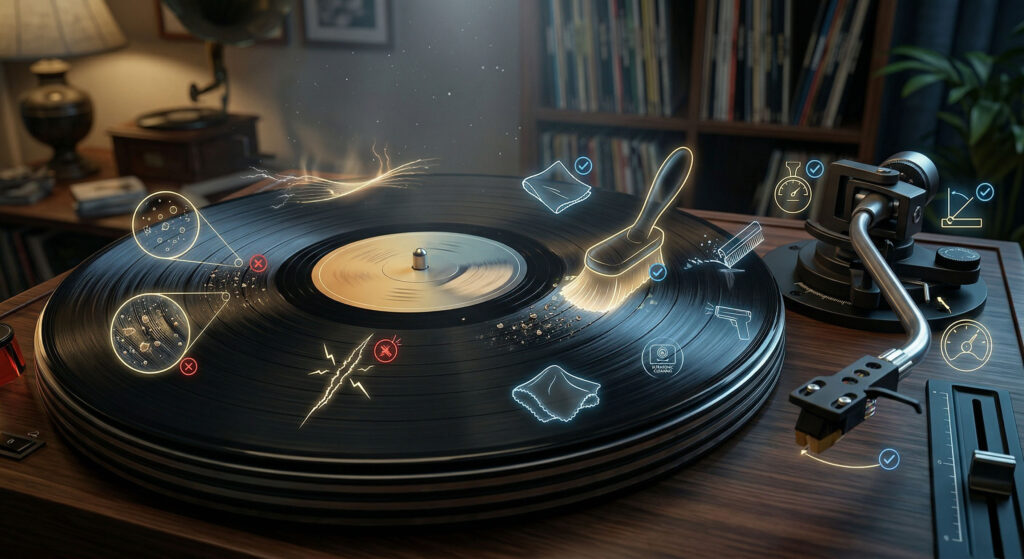
Some surface noise is normal and permanent — it is part of the analog format. But most crackle, pops and hiss are caused by fixable problems: dust in the grooves, static electricity, a dirty stylus, or groove damage from a worn needle. Understanding which noise you’re hearing tells you immediately whether it can be fixed — or whether it’s simply the character of the record.
The warm crackle of vinyl has become almost romantic — a sign of authenticity that millions of listeners love. But there’s a spectrum between “the pleasant analog character” and “this record sounds broken.” Learning to tell them apart, and knowing which problems are fixable, is one of the most useful skills in vinyl listening.
Three Types of Noise — and What Each Means
The pattern of the noise is your first diagnostic clue. Random crackle and hiss across the whole record — usually dust, static, or stylus condition. A pop in the same spot every time — a scratch, groove defect, or embedded debris at that specific point. Background hiss that never goes away — often static, a worn stylus, or occasionally the noise floor of a low-quality pressing.
Every Cause of Crackle and Pops, Explained
Fully fixable
The insidious part: playing a dirty record with a clean stylus transfers that dirt back onto the stylus, which then grinds it into subsequent grooves on the next pass. The cycle worsens the record with every play.
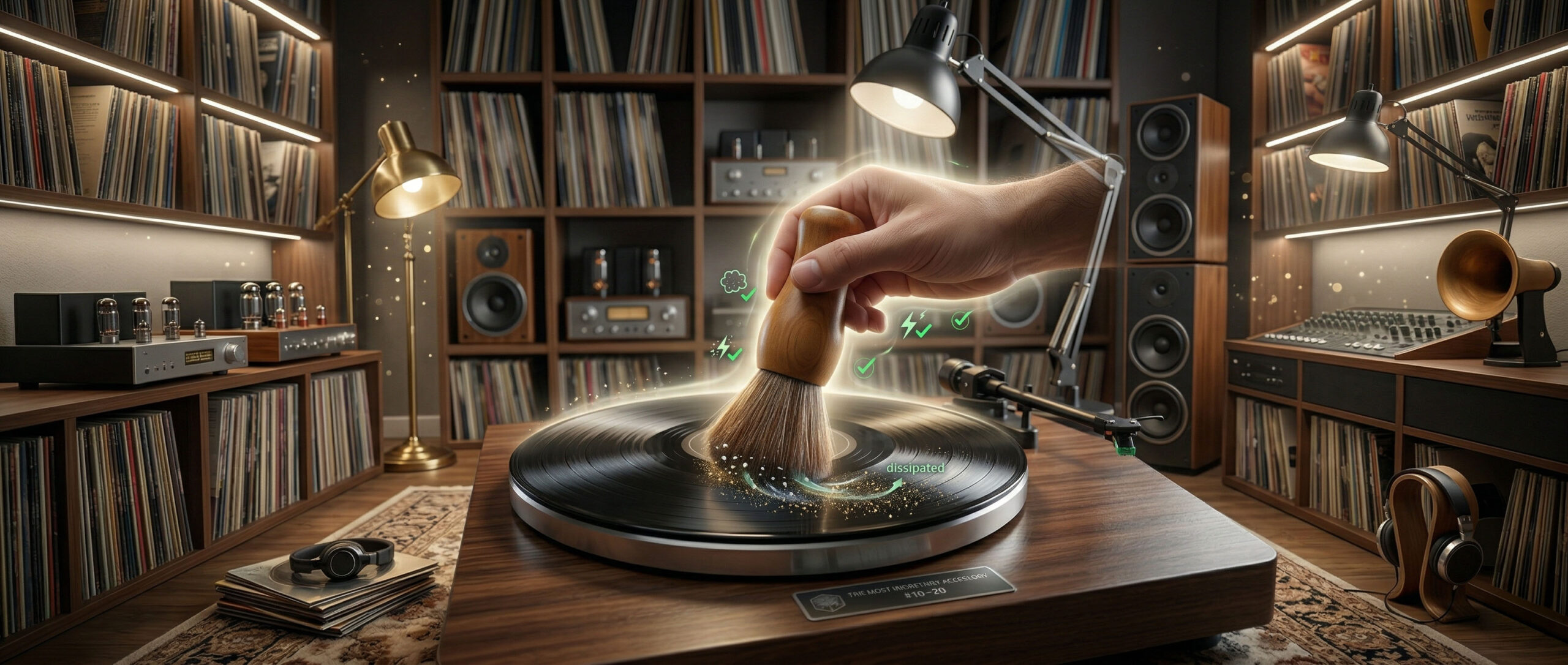
Dry brush with a carbon fibre anti-static brush before every play — sweep in the groove direction. For embedded dirt that survives dry brushing, use a wet cleaning solution and let the record dry completely before playing. Most crackle from dust disappears after a thorough wet clean.
Fully fixable
Two main sources of static: friction between the record and its inner sleeve as you remove it, and friction between the stylus and groove during playback. Dry environments (low humidity, winter heating) dramatically worsen the problem.
Use an anti-static carbon fibre brush before every play — it lifts dust and dissipates static simultaneously. Replace paper inner sleeves with anti-static polyethylene sleeves (the main source of friction-induced static on removal). A Milty Zerostat gun ($90) is the professional solution — one squeeze ionizes the air around the record, neutralizing static charge instantly. Maintaining room humidity at 45–55% significantly reduces static in dry climates.
Fully fixable
Stylus contamination also acts as an abrasive — the debris packed onto the tip grinds against the groove walls with every revolution, causing real and permanent groove wear over time.
Clean the stylus with a dry stylus brush before every play — sweep front to back only, never side to side (sideways force can snap the cantilever). For stubborn buildup, a gel stylus cleaner (like the Onzow Zerodust) lifts debris without mechanical contact. Never use alcohol on a stylus — it dissolves the adhesive bonding the stylus to the cantilever.
Fixable — replace stylus
Stylus wear is gradual and easy to miss — the deterioration happens so slowly that you adapt to the worsening sound without noticing. The clearest sign: records that used to sound great now sound consistently noisy even after cleaning.
Replace the stylus. Most MM cartridges have a user-replaceable stylus that snaps off and on without tools. The general guideline is 500–1,000 hours of play, but a stylus played on dirty records wears much faster. If your record player is more than two years old and you’ve never replaced the stylus, this is the most likely cause of persistent crackle.
Fully fixable
Wet clean new records before first play. This single step can transform a new record from mediocre to excellent — many experienced collectors report significant improvement on records they assumed were poor pressings, after cleaning. The residue is water-soluble and comes off with any standard vinyl cleaning solution.
Permanent
This is distinct from dirt-induced noise in that it persists after thorough cleaning. Groove wear from a cheap ceramic cartridge is particularly insidious — the damage looks like a slight whitening or frosting of the groove when held to light, and produces a papery hiss that worsens on loud passages.
Clean the record thoroughly first — what appears to be permanent groove damage is often embedded dirt. If the noise persists after a professional wet clean, the damage is real. Minor groove wear can sometimes be improved with a higher-quality stylus (finer contact patch means less interaction with the damaged walls). Deep scratches and severe groove wear are permanent.
Permanent
Clean thoroughly and play several times — pressing residue can mimic the sound of pressing defects. If the noise remains after cleaning and a few plays, contact the retailer. Many specialist record stores will exchange demonstrably defective pressings. For valuable records, some pressing defects can be partially mitigated with an ultrasonic cleaning machine, which reaches contamination embedded in the groove walls.
Some Surface Noise Is Normal — Here’s How Much
Part of the charm of vinyl is a slight warmth and texture that digital formats don’t have. A perfectly silent record is not the goal — and not realistic on most vintage pressings. But there’s a meaningful difference between “the character of vinyl” and “this record has a problem.”
A light background crackle on used records — especially on records from the 1960s–80s. They have years of play, handling, and storage history.
Slight hiss on quiet passages — the noise floor of the vinyl medium itself. More audible on records with wide dynamic range (classical, jazz).
Occasional random pops — even a clean record in good condition will produce the occasional pop. This is the format.
More crackle on the inner grooves — as the tonearm approaches the label, the stylus velocity is lower and inner groove geometry tighter. A slight increase in noise near the end of a side is completely normal.
Continuous loud crackle that drowns out the music — dirty record, dirty stylus, or worn stylus.
A sharp pop in the same spot on every play — scratch or groove obstruction at that point.
Crackle that gets worse every play — playing dirty, either record or stylus. Stop playing and clean both immediately.
Constant background hiss that wasn’t there before — stylus may be worn. Compare with a known clean record; if all records suddenly sound noisier, the stylus is the likely cause.
The Noise-Prevention Routine — Before Every Play
A dry brush removes loose surface dust. It does not remove embedded grime, fingerprint oils, or pressing residue. For any record that crackles persistently after dry brushing, wet cleaning with a dedicated vinyl cleaning solution is the next step — and often produces a dramatic improvement. Apply solution with a microfibre cloth or dedicated brush, work in the groove direction (circular), and let the record air dry completely before playing. For serious collectors, a record cleaning machine (vacuum or ultrasonic) is the professional standard.
The First Accessory Every Record Player Owner Needs
If you take one thing from this lesson: a carbon fibre anti-static brush used before every play eliminates the two most common causes of crackle — dust and static — in a single five-second step.
Most crackle and surface noise is fixable, and most of it comes from two sources: dust and static. Clean the record before every play, clean the stylus before every play, switch from paper to anti-static inner sleeves, and maintain moderate room humidity. These four habits eliminate the majority of noise complaints without spending money on anything beyond a $15 carbon fibre brush. For persistent noise that survives thorough cleaning, check the stylus age. For noise in the same spot every time, accept that the groove has a physical mark — and decide whether it bothers you enough to matter.
Interested in the products mentioned? Shop Arkrocket directly:
Browse Arkrocket Record Players →