
The difference is purely about how the tonearm moves — not about sound quality in any meaningful way for casual listeners. Automatic record players do the lifting for you. Manual record players require you to place and lift the tonearm yourself. Semi-automatic splits the difference: you place the needle, but the machine lifts it at the end. For most beginners, automatic or semi-automatic is the right choice. For audiophiles chasing the best possible sound, manual opens up more high-end options.
When you’re browsing record players for the first time, you’ll see these three terms everywhere — and they sound more intimidating than they are. The mechanism they describe is simple: it’s just about whether a motor and gear system moves the tonearm, or whether you do it with your hand.
Everything else about the turntable — sound quality, cartridge, tracking force, drive system — is separate from this question entirely. A great-sounding record player can be automatic or manual. A bad-sounding one can be either too.
Automatic, Semi-Automatic and Manual — What Each Actually Does
Most beginner-friendly
Place record on platter
Press Play button or move start lever
Tonearm lifts, moves, and lowers automatically
At end of side — tonearm lifts and returns automatically, motor stops
Best of both worlds
Place record on platter, start motor
Lift tonearm manually, position over record edge
Lower cueing lever to drop stylus into first groove
At end of side — tonearm lifts and returns automatically ✓
Audiophile standard
Place record, start motor
Lift tonearm, position over edge of record
Lower cueing lever — stylus drops into first groove
At end of side — you lift tonearm, return to rest, stop motor manually
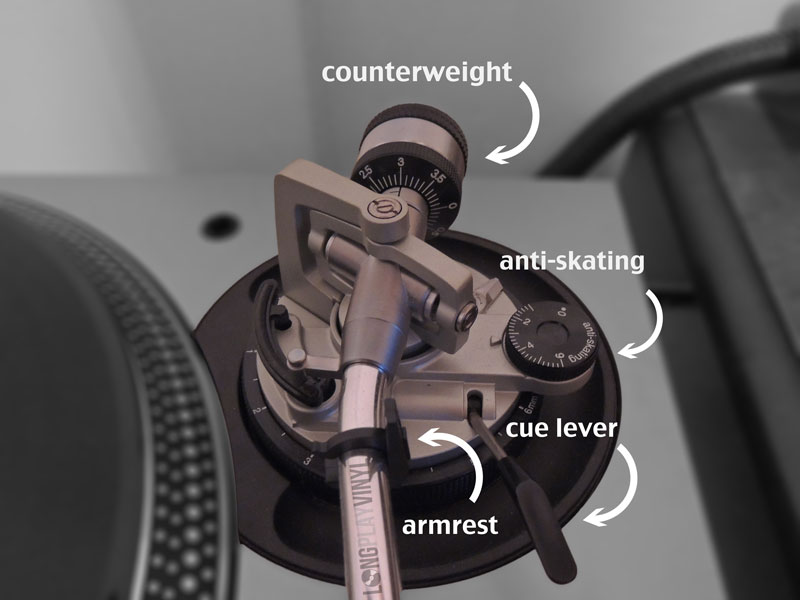
Does Automatic vs Manual Record Player Actually Affect Sound Quality?
This is the question vinyl forums argue about endlessly. The honest answer is: in theory yes, in practice rarely audible for most listeners.
A fully automatic record player has a mechanical linkage between the platter and the tonearm — gears, springs, sensors — that detects when the record ends and triggers the return sequence. The concern is that these mechanisms can introduce a small amount of additional resonance or vibration into the tonearm during playback.
A fully manual record player has no mechanical connection between the platter and tonearm except the stylus in the groove. The tonearm bearing can be designed without the constraints imposed by fitting an automatic mechanism around it. This is why every reference-class, $1,000+ audiophile record player on the market is manual.
The automatic mechanism only operates during the first and last few seconds of a side — when the tonearm is lifting, moving, and lowering. Once the stylus is in the groove and playing, the mechanism is disengaged on well-designed automatic turntables. The signal path is no different from a manual turntable during normal playback. The debate mainly matters at the level of high-end tonearm bearing design — not at the $100–$400 price range most beginners are shopping in.
For practical purposes: if you’re buying your first record player, the difference between automatic and manual will not be the thing that determines how good your vinyl sounds. Your cartridge, stylus condition, tracking force, and phono preamp quality all matter far more.
Automatic vs Manual Record Player — Quick Reference
| Feature | Automatic | Semi-automatic | Manual |
|---|---|---|---|
| Tonearm placement | Machine | You do it | You do it |
| Tonearm return | Automatic | Automatic | Manual |
| Motor stop at end | Yes | Yes | Manual |
| Risk if you leave room | None | None | Stylus in runout groove |
| Tracking force adjustable | Sometimes | Usually | Always |
| High-end audiophile models | Rare | Some | Most |
| Cartridge upgradability | Limited | Good | Full |
| Best for | Beginners, casual | Most listeners | Audiophiles |
Will the Stylus Get Damaged Sitting in the Runout Groove?
This is the fear that pushes many beginners toward automatic turntables. The runout groove — the locked groove at the end of a side that keeps the needle circling in one place — sounds like a continuous click or pop. People worry that leaving the stylus there will damage it or the record.
A stylus sitting in the end groove of a record for a few hours does not cause meaningful damage to a quality stylus or the record. The locked groove is designed for exactly this purpose — it is smooth and circular, not a playing groove with complex modulations. The stylus simply circles without reading any signal. The record will not be damaged. The stylus will not be damaged. You should still develop the habit of lifting the arm when you notice the side is finished — but missing it occasionally is not a crisis on a manual turntable.
If you own a manual turntable but worry about leaving it running, a device called the Q Up ($39) fits most tonearms and automatically lifts the arm when it reaches the end of the record. You arm it before each side and it triggers on the runout groove. It gives you the peace of mind of a semi-automatic without replacing your manual deck. Worth considering if you like to listen while working or falling asleep.
Which Type of Record Player Is Right for You?
No → Continue to question 2.
No, I’m present when I listen → A manual record player is fine. The ritual is part of the experience, and you get access to the widest range of great models.
How Arkrocket Record Players Are Configured
Arkrocket designs its record players around the most important priority for beginners and casual listeners: protection and ease of use, without sacrificing sound quality.
Discovery II and the Saturn V Jukebox are the two Arkrocket models with automatic tonearm return. When the record ends, the arm lifts and the motor stops automatically — ideal for listeners who want a fully hands-off experience.
Curiosity III, Coryphaeus, Huygens, Cassini, and Polaris II are all fully manual turntables. You place the tonearm yourself at the start, and lift it when the side is finished. This gives you complete control and access to the full range of cartridge upgrades — and as explained above, the runout groove is not a hazard if you occasionally forget. The Q Up accessory ($39) is a practical add-on if automatic return is important to you on any of these record players.
The manual operation on most Arkrocket record players is a deliberate engineering choice — keeping the tonearm mechanism free from any automatic linkage means fewer parts, a cleaner signal path during playback, and full cartridge upgradability. Once you’ve cuedatracked a record a few times, the ritual becomes second nature.
For beginners: choose an automatic or semi-automatic record player. The tonearm return mechanism protects your stylus and records, removes anxiety from the listening ritual, and costs you nothing in sound quality at normal listening levels. For experienced listeners who want to explore the full range of cartridge upgrades and high-end tonearm options: a manual record player is the correct destination. The cueing ritual is simple to learn and most vinyl enthusiasts come to enjoy it as part of what makes vinyl different from streaming.
Interested in the products mentioned? Shop Arkrocket directly:
Browse Arkrocket Record Players →